
Most people think AI is just for tech companies and knowledge workers.
They’re wrong.
While everyone’s obsessing over chatbots and productivity apps, the real opportunity is happening in the physical world. In construction sites, repair shops, and service businesses where people actually build and fix things.
These industries have been operating the same way for decades. And they’re ripe for disruption.
The Construction Problem Everyone Ignores
75% of construction projects finish behind schedule. Not because workers are lazy or incompetent, but because nobody really knows what’s happening on job sites.
Crews work across multiple locations, materials arrive at different times, and project managers try to track everything from offices miles away. The information flow is broken.
Builders and foremen can’t spend their days writing detailed reports about what they’ve accomplished. Project teams can’t effectively track progress when the data they’re getting is incomplete or days old. Material deliveries get missed. Payments get delayed not out of malice, but because nobody knows what was actually delivered and completed.
It’s a mess that costs billions in delays and overruns.
Enter Dexter’s AI Agents
A startup called Dexter decided to fix this with AI agents that work like new crew members—no training needed.

Daily Logs Agent. Instead of end-of-day paperwork, foremen simply talk to Dexter’s voice AI. It has real conversations, asks follow-up questions, takes notes, and automatically pulls in weather and project data. Then it generates clean daily reports in the company’s format and sends them directly to general contractors and project managers.
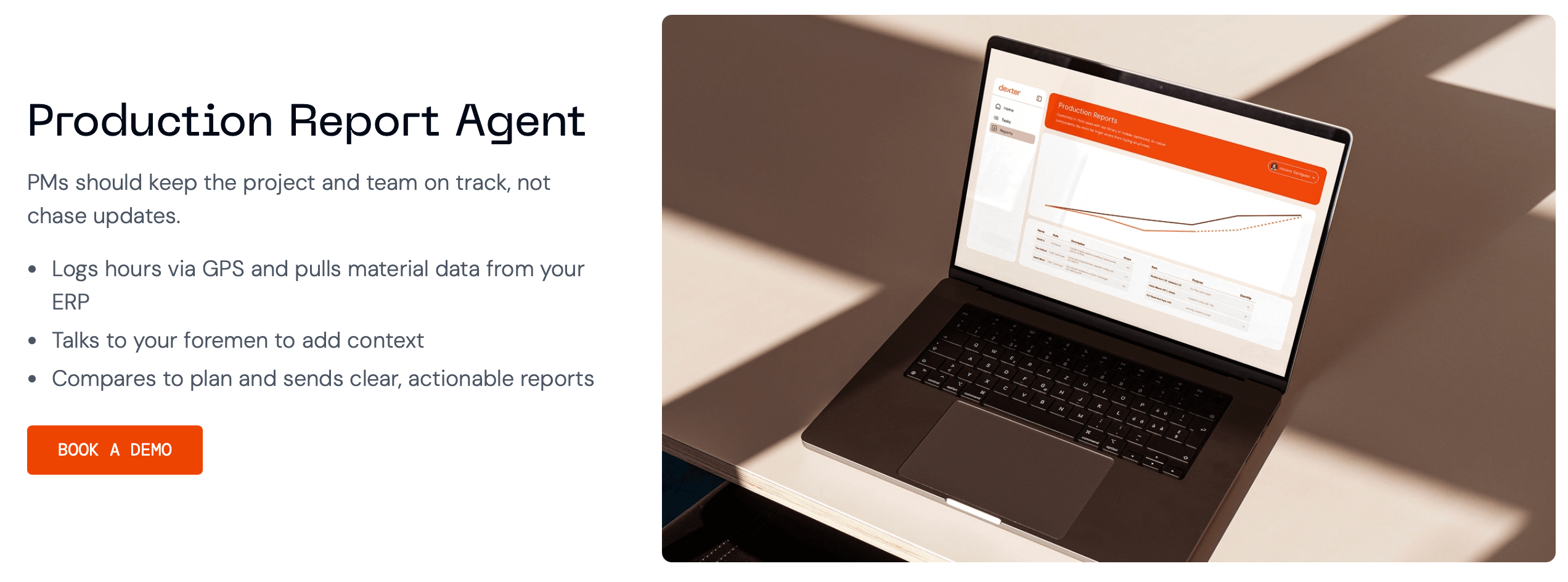
Production Report Agent. This agent logs hours via GPS, pulls material data from ERP systems, and talks to foremen to add context. It compares everything against the project plan and sends clear, actionable reports so PMs can keep projects and teams on track without chasing updates.
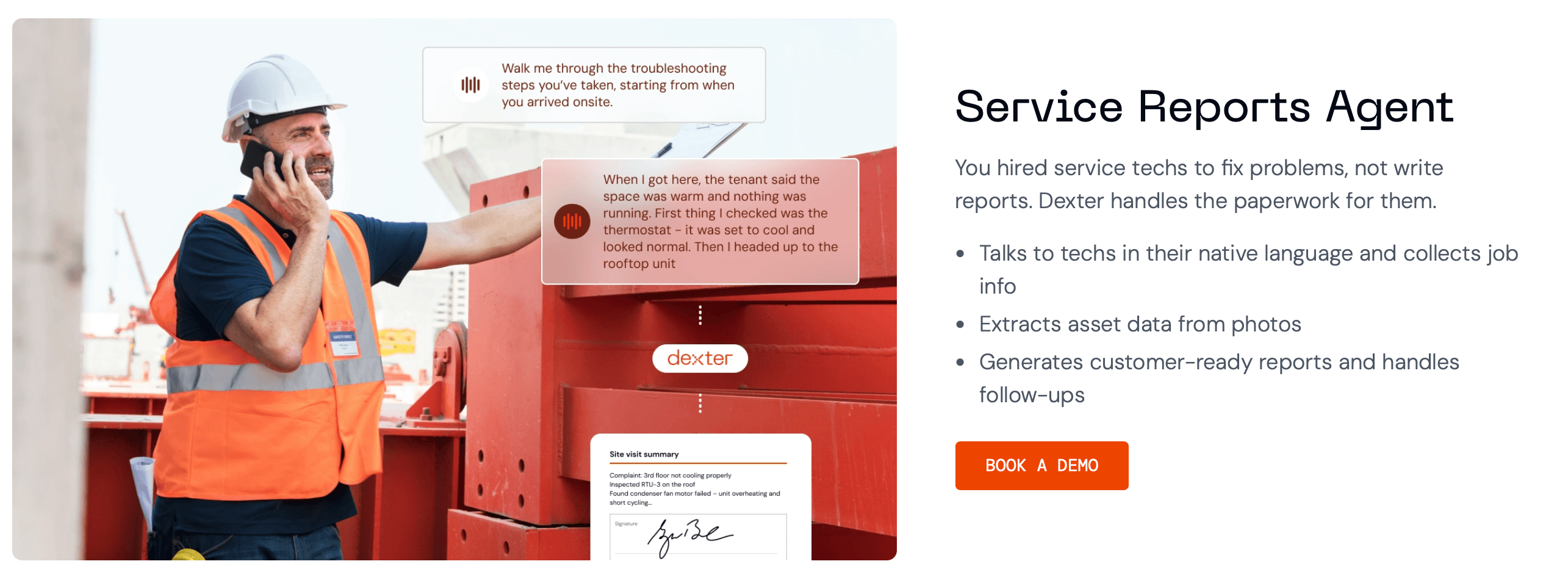
Service Reports Agent. For service work, this voice agent collects all required job information from techs, including parts used and follow-ups needed. It extracts asset data from photos and generates complete reports ready for customer approval.
The interesting part? Despite starting with mechanical contractors, the same approach works for any field operations business—equipment repair, maintenance, installations. Anywhere there’s a gap between field teams and back-office operations.
The Bigger Pattern
Dexter isn’t alone in this approach. There’s a clear trend emerging: using AI to capture better information about what’s happening in the physical world.

Buildots raised $166 million (including $45 million in May) with a similar concept to Dexter. Their AI collects information about what’s happening on construction sites directly from workers and compares it against project plans to mark what’s been completed and signal what’s running behind schedule.
The main difference? Instead of voice reports, Buildots’ AI analyzes footage from small cameras attached to workers’ hard hats. At the end of each workday, workers plug their cameras into computers so the AI can download and analyze the recordings. Same goal as Dexter—better field data collection—but through visual monitoring instead of conversations.

Siro pulled in $50 million in May for an AI coach designed for people selling installation, repair, and maintenance services through face-to-face customer interactions. Salespeople record these offline conversations, then the AI coach analyzes them and provides advice on what needs improvement in such negotiations.
Using Siro’s AI coach increases closed deals by 36% and reduces turnover of these types of salespeople by 30%, because they finally start earning decent money.
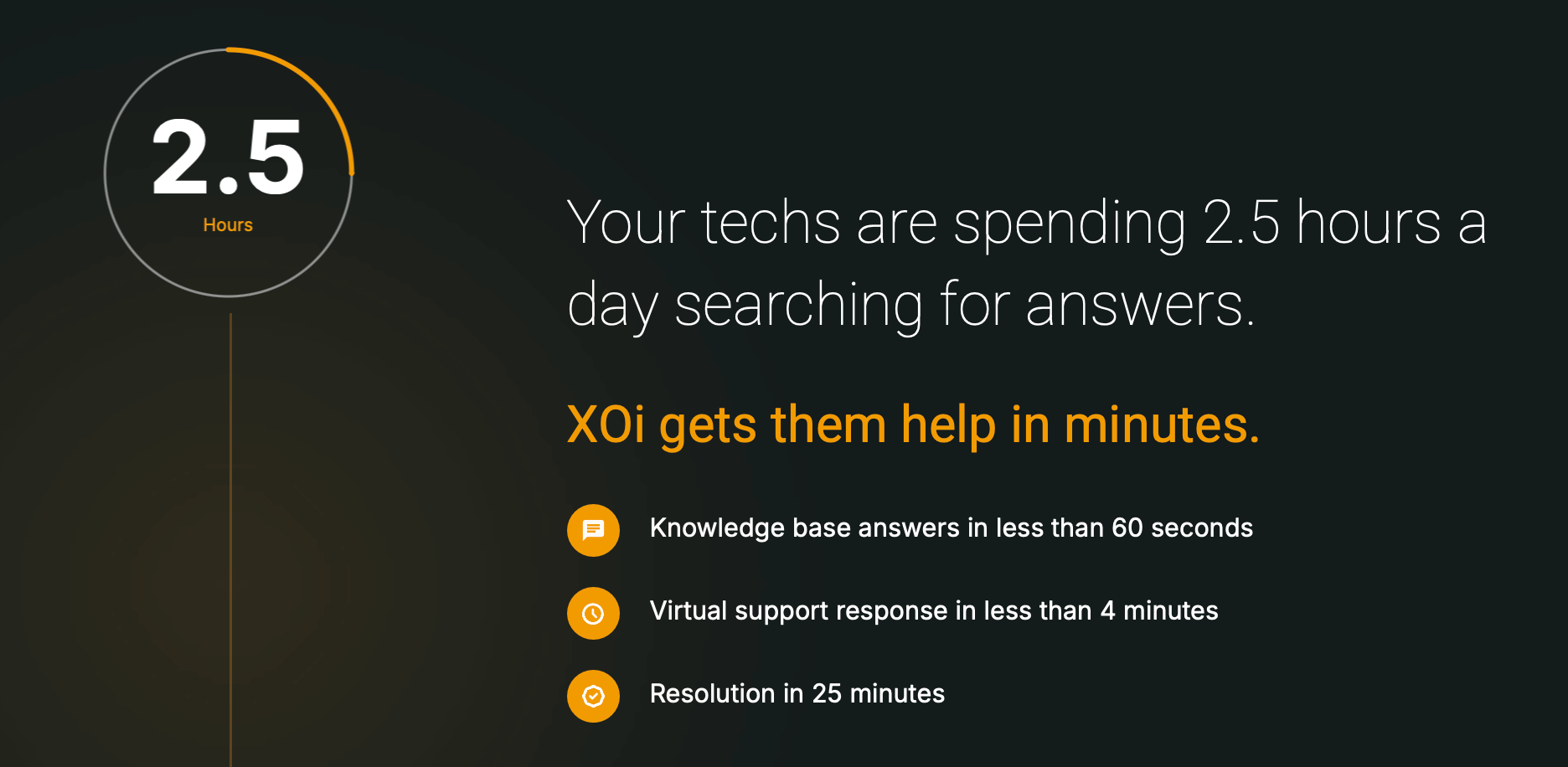
XOi raised $230 million in February for an app helping equipment repair technicians. A technician can point their phone camera at a label attached to equipment, and XOi’s AI will provide the equipment type and model, possible causes of malfunction based on symptoms described by the technician, plus diagrams and step-by-step plans for finding and fixing the problem.
Technicians typically spend 2.5 hours per day searching for this information independently. XOi gets them initial answers in 4 minutes and complete solutions in 25 minutes. The accurate answers XOi provides also reduce customer complaints about poor repairs and repeat visits by 40%.
The Opportunity
We live in the offline world. Most business still happens in physical spaces with real people doing actual work. But managing these businesses effectively has always been hard because gathering accurate, timely information about field operations is expensive and unreliable.
AI is finally making it cheap and simple to collect high-quality data about offline activities. Voice recognition, computer vision, and mobile devices are mature enough to work reliably in real work environments.

Minimist demonstrates this in an unexpected area—secondhand clothing stores. Their app lets shop owners photograph items customers bring in, and AI identifies the piece, adds it to inventory, and suggests pricing based on current market rates. All in under 2 minutes.
The pattern is clear: find offline businesses where success depends on fast, accurate information gathering, then figure out how AI can make that collection process better, cheaper, and more reliable.
Think about industries where workers spend significant time on documentation, reporting, or searching for information. Where delays happen because people don’t know the current status. Where decisions get made with incomplete data because getting complete data takes too long.
Construction, repair services, maintenance, retail inventory, field sales, equipment servicing—these are massive industries that have barely been touched by modern technology.
One important lesson from XOi: they originally tried using VR headsets for the same functionality, but special hardware proved too expensive and unreliable. When they switched to smartphone cameras, adoption took off. The infrastructure has to be simple and use tools people already have.
—
Company Details:
– Dexter: getdexter.co, $500K raised
– Buildots: $166M total funding
– Siro: $50M latest round
– XOi: $230M latest round